

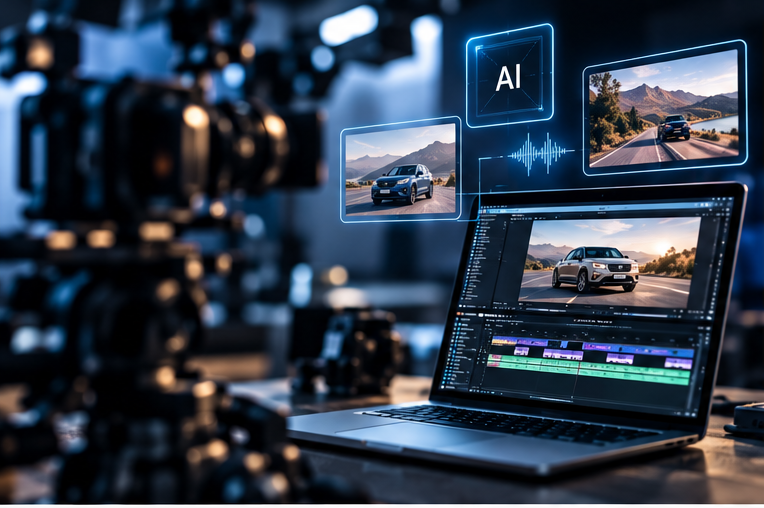
AI video isn't replacing the shoot. It's changing the prep
It All Begins Here
2026 is the year AI video became an everyday tool. In February, Kling 3.0 and Seedance 2.0 brought clips with sound, Kling even in 4K. Google followed with the cheaper Veo 3.1 Lite, reportedly around 5 cents per second at 720p.
What does this mean for a production company? For us, the biggest gain comes before the camera rolls. Moodboards, animatics and test shots now take hours instead of days, and clients can see an idea move before they commit a budget.
The final piece still needs real people, real places and real products. A brand wants to show its own car, its own store, its own team, and AI can't replace the camera there. It can support it, though: extending a background, adding effects, or cutting alternative versions for each platform.
The market moves fast. OpenAI announced its Sora 2 API would close on 24 September 2026. That's why we don't tie ourselves to a single tool. We test new ones constantly, but the story always stays at the centre and technology is just the means.
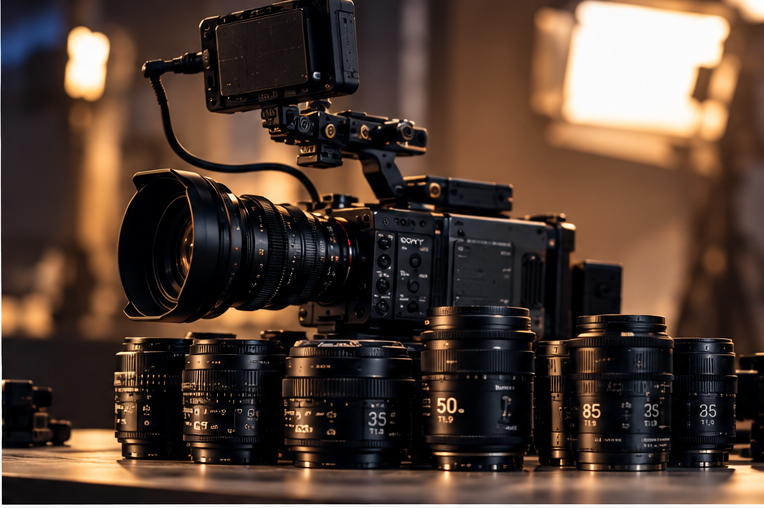
2026 is the year of the compact cinema camera
It All Begins Here
Manufacturers are now building for crews like ours: small, flexible and fast. Sony has pushed the full-frame FX5 back from August to late October or later, yet it already tops Amazon's new releases in professional video cameras.
Nikon, almost a year after its first cinema camera, the ZR, announced nine new Z Cinema lenses in September. The first is a 50mm T1.9 VV. The range also covers RED's large-format sensor, a sign the two systems are moving closer together.
For clients, this means something very practical: cinematic images with a smaller crew, less time on set and a lower profile at events and workplaces. Big-screen quality now fits in a backpack, which opens the door to more flexible and more affordable productions.
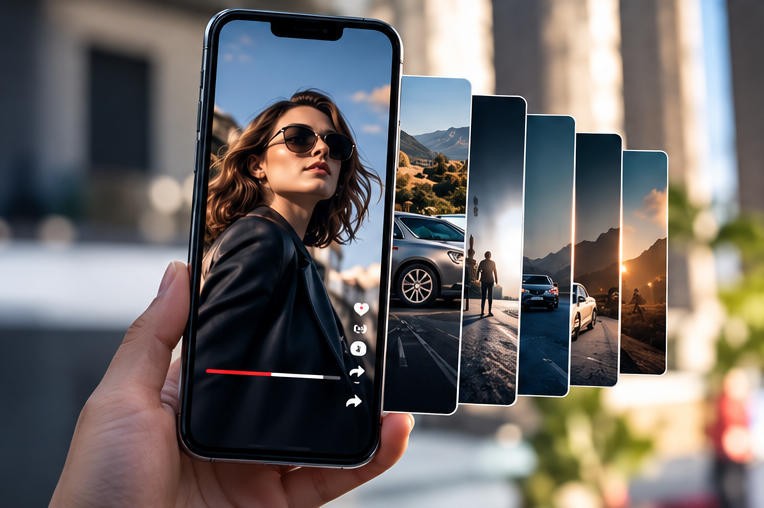
Vertical stories are becoming series
It All Begins Here
On 23 September, YouTube launched Shorts series. Creators can now group their Shorts into seasons and episodes, just like a TV show. The move isn't random: microdramas drew 6.5 billion views on YouTube in the first half of 2026, and Omdia expects the global market to reach $14 billion by year end.
For brands the message is clear: vertical video is no longer just for quick teasers. A short series of 5–6 episodes with one character and one story can hold an audience for weeks, something a single spot rarely achieves.
In practice, we plan our shoots vertical-first: framing, pacing and subtitles are designed for the phone screen from the start. One shoot can then deliver both the horizontal spot and a full series for social.
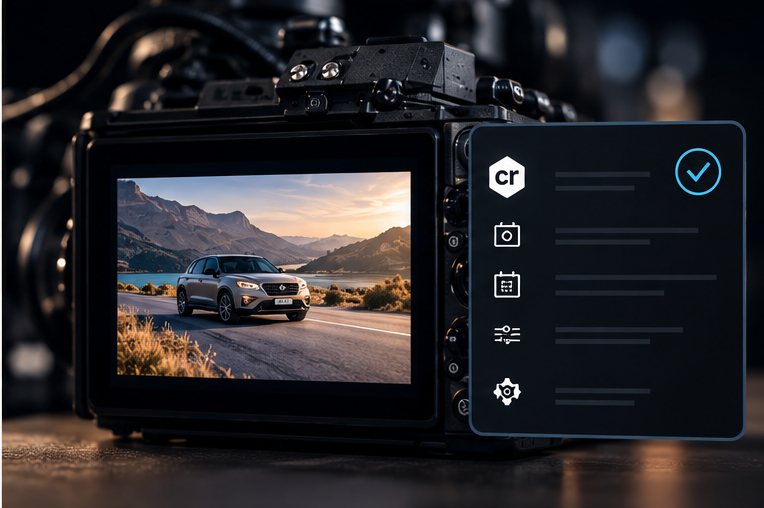
How to prove a photo is real
It All Begins Here
As AI images get more realistic, authenticity becomes valuable. The industry's answer is Content Credentials: an open standard (C2PA) that records who made an image, with which camera, and what was changed afterwards.
Adoption is speeding up. In May 2026 Canon rolled out a C2PA workflow for the EOS R1 and R5 Mark II, while Nikon and Sony already support it on professional bodies. On the other side, Google Photos now shows "how this was made" for an image, and OpenAI tags the images it generates with C2PA. Meanwhile, the EU AI Act requires AI-generated content to be identifiable.
For a brand, this means trust. A real product or people shoot with provable origins stands out in a feed full of synthetic images. Truth is becoming a differentiator again.